
Last updated November 22, 2026
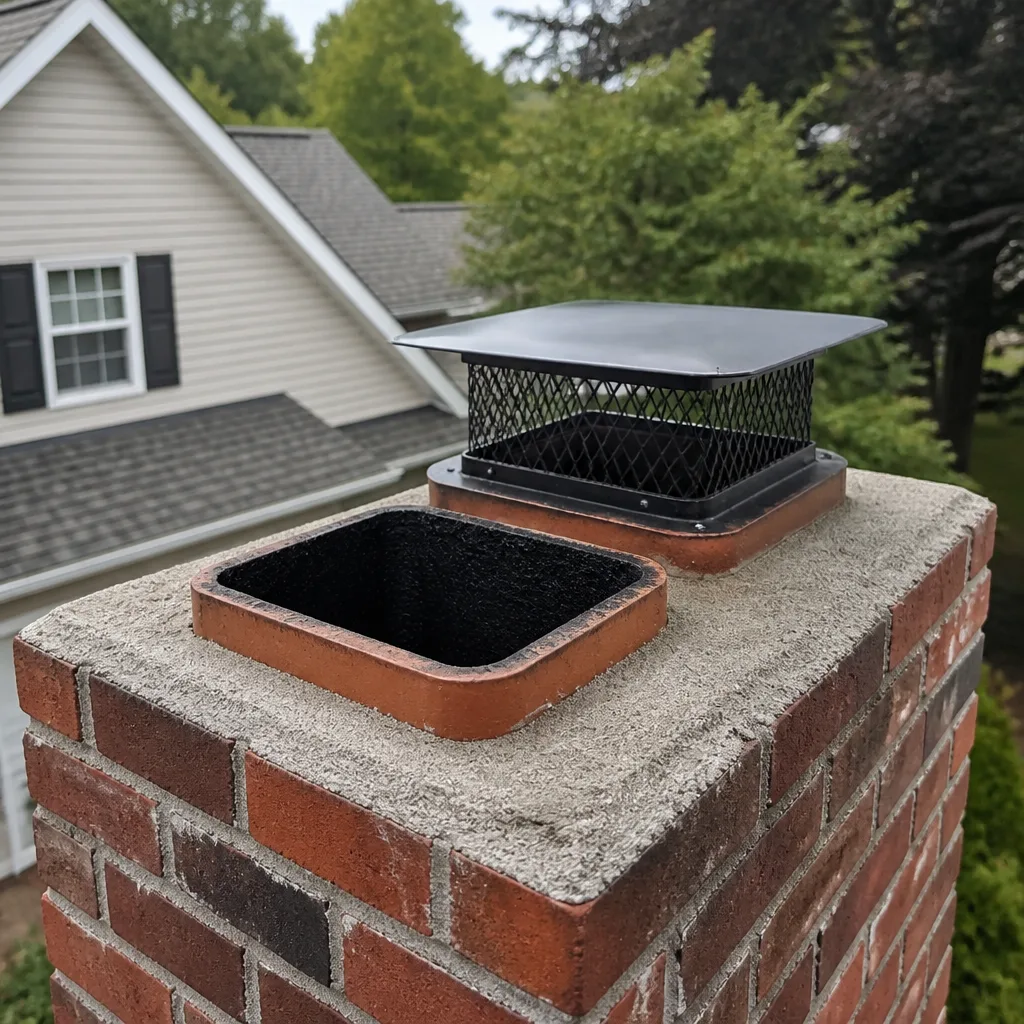 Sweep & inspection
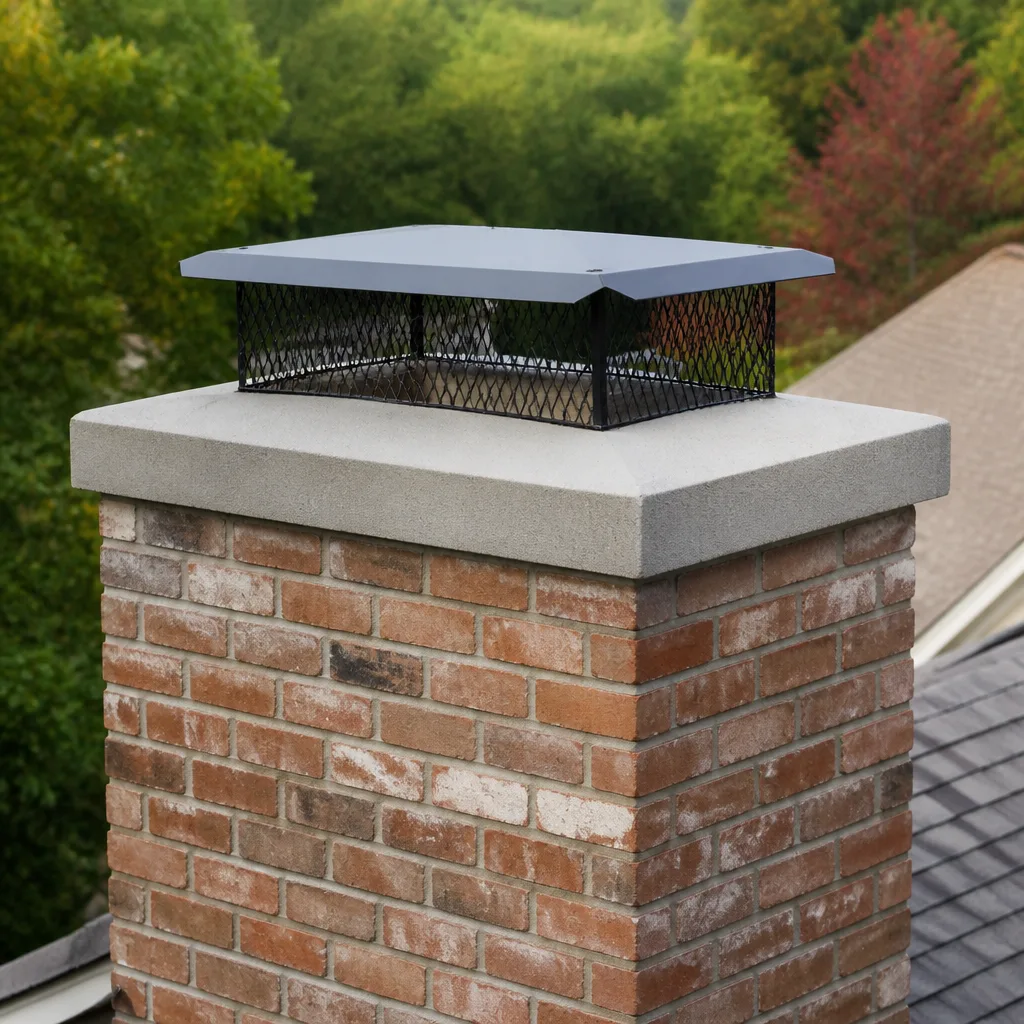 Caps & crowns
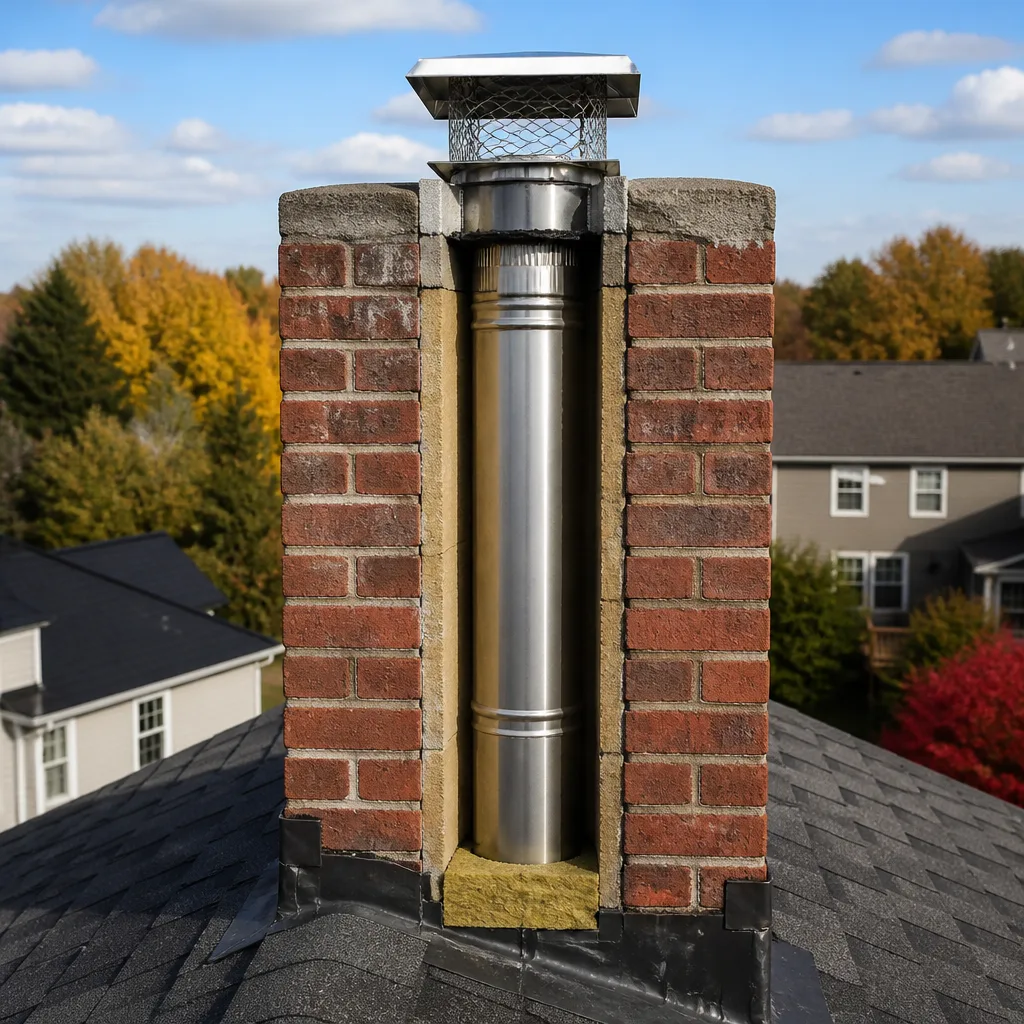 Flue relining
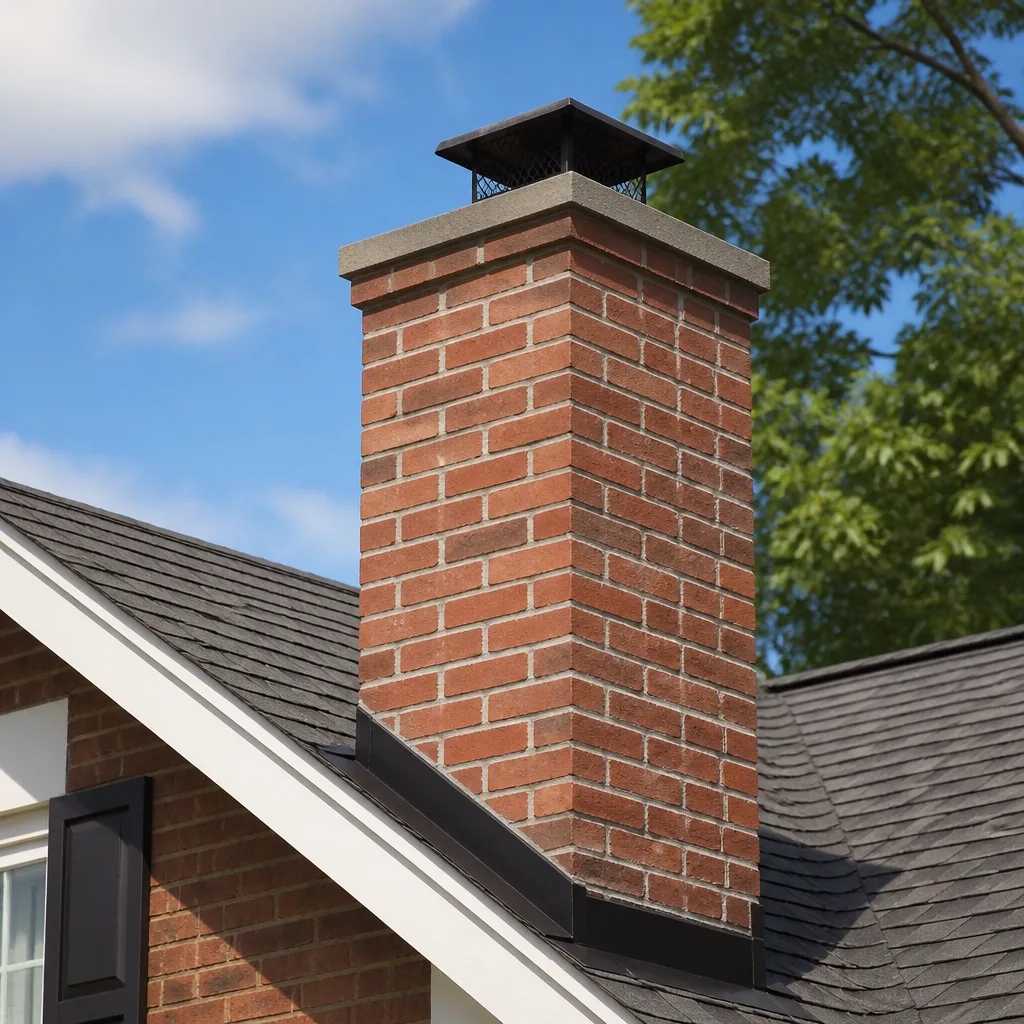 Masonry repair
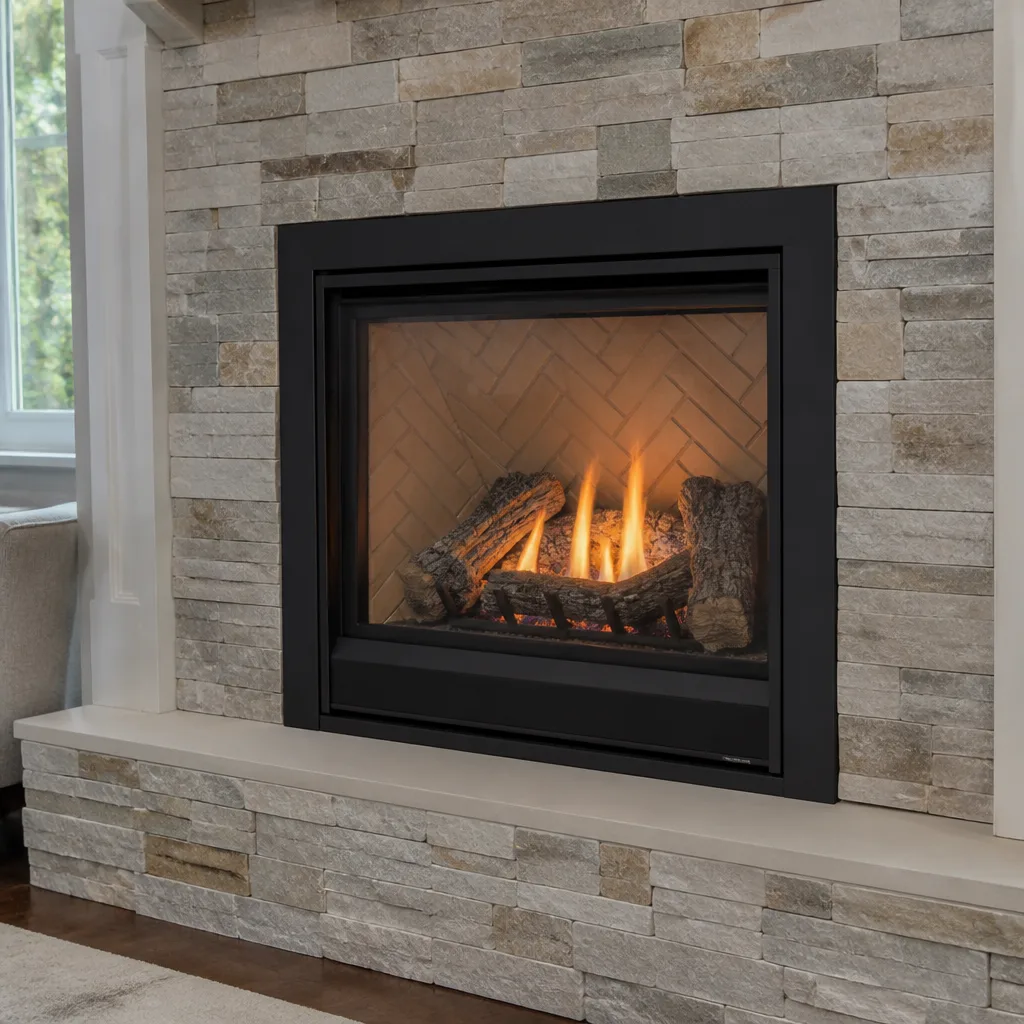 Gas fireplace service
Level 1 sweep and inspection to the NFPA 211 annual standard - flue, crown, cap, and flashing checked and photographed
Chimney sweep logs do not sweep chimneys. They loosen some creosote - which then falls where a brush and vacuum still have to collect it.
DIY vs Professional Chimney Cleaning: The Holmesburg Homeowner’s Decision Guide
Chimney brush kits are widely available and they do remove loose soot. That much is true. But a brush only touches what it can reach, and Stage 2 and Stage 3 creosote deposits don’t respond to a brush at all. The real problem is that from the firebox, an untrained eye can’t tell Stage 1 soot from the glazed, tar-like stuff that fuels a chimney fire. That is the gap DIY doesn’t cover. This guide maps exactly what a homeowner can physically accomplish, where that work ends, and which findings make professional evaluation non-optional in Holmesburg’s older housing stock.
Quick Answer
A homeowner with a rod-and-brush kit can remove light Stage 1 soot from a straight flue, but that is the outer limit. Professional chimney cleaning adds what no consumer kit provides: liner camera footage, a smoke chamber inspection, chemical treatment for Stage 2 and Stage 3 creosote, and a written condition report. In Holmesburg, where many homes have unlined or clay-tile flues of unknown condition, that evaluation is the actual service; brushing is only part of it.
Styles & brands we work with
- Sweep & inspection
- Caps & crowns
- Flue relining
- Masonry repair
- Gas fireplace service
Table of Contents
- What You Can Actually Accomplish With a DIY Brush Kit
- The Three Creosote Stages and Why Only Stage 1 Is DIY-Territory
- What a Professional Sweep Provides That Has No DIY Equivalent
- Why Holmesburg’s Older Housing Stock Changes the Equation
- The Decision Framework: When Professional Service Is Non-Optional
- How Often a Holmesburg Chimney Actually Needs Attention
- Safety and Liability: What DIY Puts at Risk
What You Can Actually Accomplish With a DIY Brush Kit
A consumer rod-and-brush kit will do one thing well: knock loose, dry soot off the walls of a straight flue. If your chimney has a simple vertical run, no offsets, and the deposits are powdery and thin, a homeowner can make visible progress. That’s not nothing. Annual light cleaning does keep Stage 1 accumulation from building up.
Here’s what the kit does not do, and this is where expectations need to stay realistic:
- It can’t clean at an angle. Most Holmesburg rowhouses don’t have a perfectly straight flue. Offsets, smoke shelves and smoke chambers block a rigid rod, and a brush that can’t reach a surface can’t clean it.
- It can’t treat glazed creosote. Brush bristles skate over Stage 2 and Stage 3 deposits. Professional chemical treatments and rotary tools are what break those down.
- It can’t inspect. You cannot see the upper flue, the smoke chamber or the crown from inside the firebox. Without a camera, you’re cleaning a system you haven’t looked at.
- It can’t confirm a clog. Nesting debris, collapsed tile and animal blockages look identical to “not drawing well” from the firebox. Only a camera tells you which one you have.
- It can’t document condition. There is no written record of what your flue looked like, which matters if you ever sell the house or file an insurance claim.
The honest summary: a DIY kit is a maintenance tool for a known-good flue. It is not an evaluation tool, and it can’t tell you whether your flue is the known-good kind. In our experience, most Holmesburg homeowners who start with a brush kit end up calling us because of what they couldn’t see, not because of what they could.
The Three Creosote Stages and Why Only Stage 1 Is DIY-Territory
Creosote forms when wood smoke cools before it leaves the flue. How much forms and how hard it sets depends on how hot the fire burns and how well the chimney drafts. The industry breaks it into three stages, and only the first is something a homeowner can manage.
Stage 1: Soot and Flaky Creosote
This is the powdery, black, flaky deposit that comes off easily with a brush. It’s what you see when you look up the flue and it looks like ash. Stage 1 is a normal byproduct of burning wood and it’s the one stage a consumer kit can meaningfully address. Still worth removing, still worth keeping in check, but not the stage that causes fires.
Stage 2: Hard, Crusty Deposits
Stage 2 creosote has baked onto the flue walls into a crust. A brush will not remove it. This stage calls for chemical treatment and, in many cases, rotary cleaning tools to break the crust loose without damaging the tile. A homeowner has no reliable way to confirm Stage 2 from the firebox, because it can sit high in the flue where the fire runs cooler.
Stage 3: Glazed, Tar-Like Creosote
Stage 3 is the puffy, hardened, fuel-rich layer that ignites at lower temperatures than wood does. It’s the stage that turns a routine flue fire into a structural problem. Stage 3 requires professional equipment and, if it’s extensive enough, the flue may need to be relined afterward. There is no safe DIY path here. This is not a “work harder” situation.
For Holmesburg homeowners burning wood through fall and winter, the transition from Stage 1 to Stage 2 happens faster than most people expect, and it happens fastest in cold, damp flues that never fully warm up. The only way to know which stage you’re looking at is a camera inspection. Call that the floor of professional territory.
What a Professional Sweep Provides That Has No DIY Equivalent
What separates a professional sweep from a homeowner with a brush is not the brushing. It’s the evaluation wrapped around it. Here’s what a proper chimney sweep actually delivers, and what no DIY kit can replicate:
- Liner camera footage. A camera run down the flue documents the interior from top to bottom. This is what turns “it seems fine” into “we can show you exactly what’s inside.” You see the footage yourself.
- Smoke chamber inspection. The smoke chamber sits above the damper, and it’s where a lot of Stage 2 and Stage 3 creosote collects. It’s also the part of the system a rigid rod cannot clean. Inspecting it requires the right access and the right tools.
- Condition report in writing. A written report records what was found, what was cleaned, what was deferred and what needs attention. That document matters when you sell, refinance, or deal with an insurer.
- Chemical creosote treatment. Where Stage 2 or Stage 3 is confirmed, we treat the flue with materials built for the job rather than trying to force it with a brush. HeatShield resurfacing is available when mortar joints have deteriorated but the liner doesn’t need a full tear-out.
- Cap and crown assessment. The top of the chimney fails before the bottom does, because that’s where weather hits. Crown cracks and missing caps let water in, which accelerates flue damage from the top down. A full sweep always looks up top.
- Whole-system view. From annual sweep to full liner rebuild, one specialist, one call. The cap, crown, liner and firebox are reviewed as a single system rather than isolated pieces.
If the inspection shows the flue is sound and just needs a clean, that’s the answer. Nothing gets recommended without camera evidence you can view for yourself.
Why Holmesburg’s Older Housing Stock Changes the Equation
Holmesburg’s housing stock runs old. Many of the rowhouses and twins in the neighborhood were built long before modern liner standards, and plenty of them still have their original unlined flues or clay-tile liners whose condition nobody has ever documented. That one fact changes the DIY calculus in a way it doesn’t in newer construction.
In a new home with a stainless liner and a documented installation, a homeowner brushing Stage 1 soot is a low-stakes maintenance task. In a Holmesburg rowhouse with a clay-tile flue of unknown vintage, the same homeowner is brushing a flue that may already have cracked joints, missing mortar, or offset tiles that could catch a brush and break. An unlined flue is vulnerable to the heat and corrosive byproducts of wood smoke in ways a lined flue isn’t.
What that means practically:
- Clay-tile flues crack with age. A crack in a tile allows heat and combustion gases into the surrounding structure. From the firebox, you can’t see it.
- Unlined flues have no safety barrier. The masonry itself is the flue. Deteriorating mortar joints are the failure point, and they erode invisibly until the flue is compromised.
- Previous renovations can hide faults. Holmesburg properties have often been through one or more remodels. Sometimes a flue has been partially sealed, rerouted, or repurposed, and the current owner has no record of it.
- Carbon monoxide risk is real in unlined or compromised flues. If the flue can’t draft properly, combustion gases can back into the living space. That’s a safety problem, not a comfort one.
This is where the DIY question stops being about capability and starts being about information. The homeowner in Holmesburg who brushes their own flue doesn’t know any more about its condition after they finish than they did before. That’s the gap.
The Decision Framework: When Professional Service Is Non-Optional
Here’s where we draw the line. DIY sweeping is defensible when the conditions below are all true. If any one of them is false, professional service stops being a preference and becomes the responsible call.
DIY is defensible when:
- The flue has been professionally inspected and documented within the last couple of years.
- The liner is intact and the inspection report says so.
- You burn dry, seasoned wood and keep the fire hot enough to minimize creosote.
- The deposits are visibly Stage 1 only, and you can see the full flue to confirm it.
Professional service is non-optional when any of these are true:
- You don’t know the flue’s history. A new purchase, a home you’ve never had inspected, or a system with no paperwork.
- The flue is unlined or has clay tile of unknown condition. This describes a large share of Holmesburg homes.
- You see glazed or crusty deposits. Stage 2 and Stage 3 don’t come off with a brush, and trying to force them can damage the flue.
- You smell smoke in the house when the fire is burning. That’s a draft or seal problem, not a dirt problem.
- The chimney hasn’t been swept in over a year of regular burning. Accumulation doesn’t announce itself.
- You’re converting to a different appliance. Wood stove installs, insert installs and conversions to gas all require the right liner for the fuel type, and the wrong one is a hazard.
- The crown or cap is damaged. Water intrusion from the top is the most common cause of flue deterioration. A sweep-only company misses this. We don’t.
The right answer for most Holmesburg homeowners is neither pure DIY nor an annual full-service call forever. It’s a professional evaluation to establish the baseline, then a documented maintenance routine built around what the evaluation found.
How Often a Holmesburg Chimney Actually Needs Attention
The general industry guidance is that a chimney should be inspected once a year and swept as needed. The “as needed” is doing a lot of work in that sentence. In practice, how often a Holmesburg chimney needs a sweep depends on three things: how much wood you burn, what you burn, and what the flue looks like.
- Heavy wood burning (most winter evenings): expect a sweep roughly once per season of use. Stage 1 accumulation builds quickly.
- Occasional use (a few fires a month): a sweep every year or two, determined by what the camera finds.
- Appliance conversions: a sweep and inspection at the time of conversion, then reassess based on the fuel and liner.
- Unlined or damaged flues: check more frequently until the liner situation is sorted, because the flue itself is the safety barrier.
Burning properly seasoned wood makes a real difference. Wet wood produces more creosote because it burns cooler, which is why the same chimney can accumulate more in a damp Holmesburg winter than a homeowner expects. The one thing we can say with confidence: if you don’t know the last time the flue was inspected, that’s the first thing to establish before any DIY sweeping makes sense. A chimney sweep is the starting point, not the finish line.
Safety and Liability: What DIY Puts at Risk
Two risks come with chimney work, and both get worse when the chimney isn’t inspected first.
The first is chimney fire. Creosote is flammable, and Stage 3 ignites easily. A chimney fire can damage the flue, crack tiles, and in the worst case spread into the structure of a rowhouse. In Holmesburg’s attached housing, a chimney fire in one unit puts the neighbors at risk too. That’s not a scare tactic; it’s the reason the trade treats creosote seriously.
The second is carbon monoxide. An unlined or damaged flue may fail to draft properly. When it doesn’t, combustion gases back into the living space rather than up the chimney. Because carbon monoxide is colorless and odorless, the only reliable defense is an inspection that confirms the flue is intact and drafting correctly. A working CO alarm is a reasonable safety measure on top of that, not a replacement for the inspection.
There’s also the matter of the work itself. Flue work happens on ladders and roofs. Fall risk on a steep or degraded roof is real, which is why we recommend trained professionals for anything that involves getting on top of the chimney. And if a brush catches a cracked tile or dislodges mortar from an unlined flue, the homeowner may create the problem they were trying to prevent, with no documentation of the prior condition. When a pro does the work, the pre-work condition is photographed, and the accountability is theirs. If a repair turns out to be needed, the same specialist handles the chimney repair without subcontracting it out.
Our technicians have up to 8 years of experience working on exactly this kind of housing stock, and we specify the right material for the flue rather than the easiest one to install.
Common Mistakes to Avoid
- Assuming a brush cleaned the whole flue. A brush only touches what it can physically reach. Offsets and smoke chambers are missed, and those are exactly where the worst creosote sits.
- Mistaking a stuck brush for a clean flue. If the brush hits resistance in an older Holmesburg flue, that’s often a sign of a collapsed tile or offset, not just a tight fit. Forcing it through can cause damage.
- Burning wet or unseasoned wood to save time. Wet wood burns cooler, which produces more creosote, faster. It also gives you less heat for the effort.
- Skipping the crown and cap check. Cracks at the top let water in, and water degrades the flue from above. A sweep that never looks at the top is only half a sweep.
- Using a chimney sweep log as a substitute for a sweep. These products help with light Stage 1 soot. They don’t inspect, they don’t clean a smoke chamber, and they don’t treat Stage 3.
- Assuming a recent renovation fixed the flue. Holmesburg homes have been remodeled repeatedly over the years. The current flue may not match any building records you have.
- Waiting until you smell smoke to act. By the time smoke backs up, the problem has usually been building for a season. A camera inspection catches it earlier.
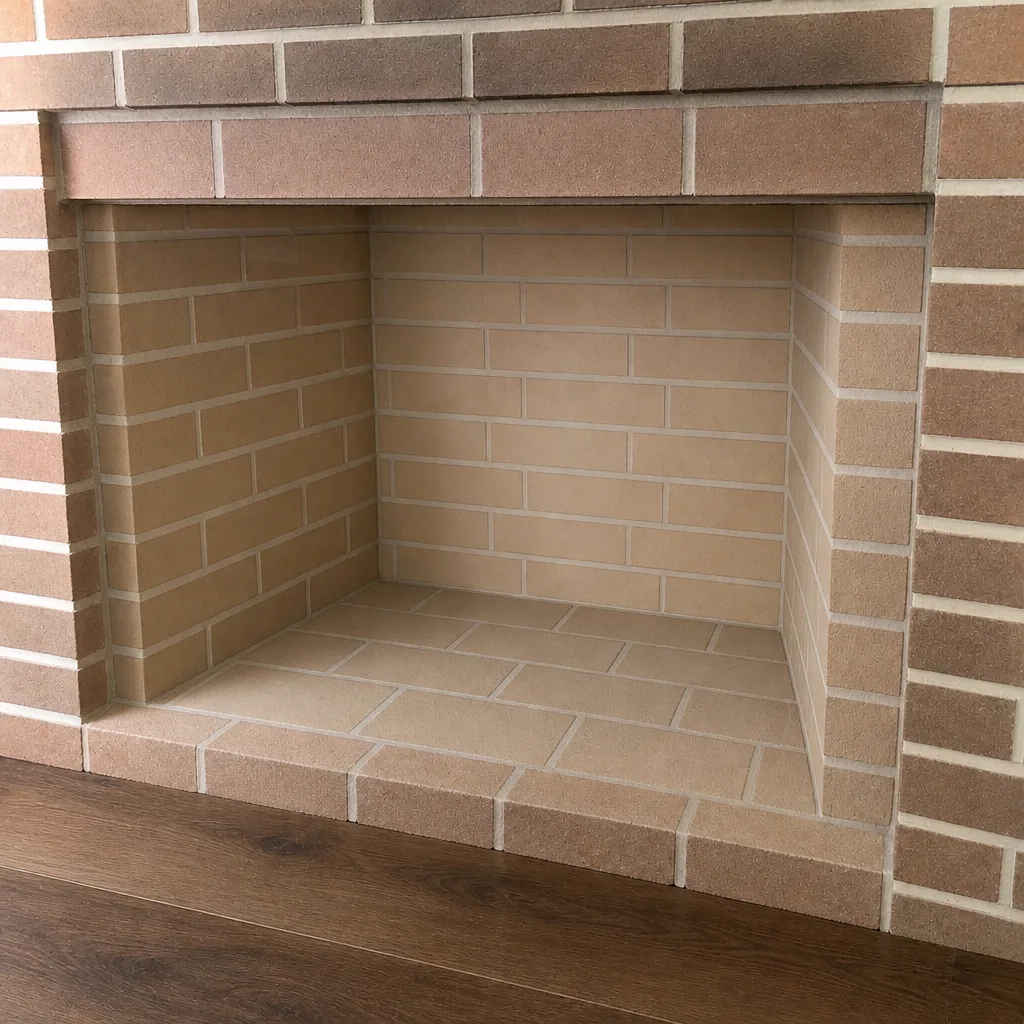
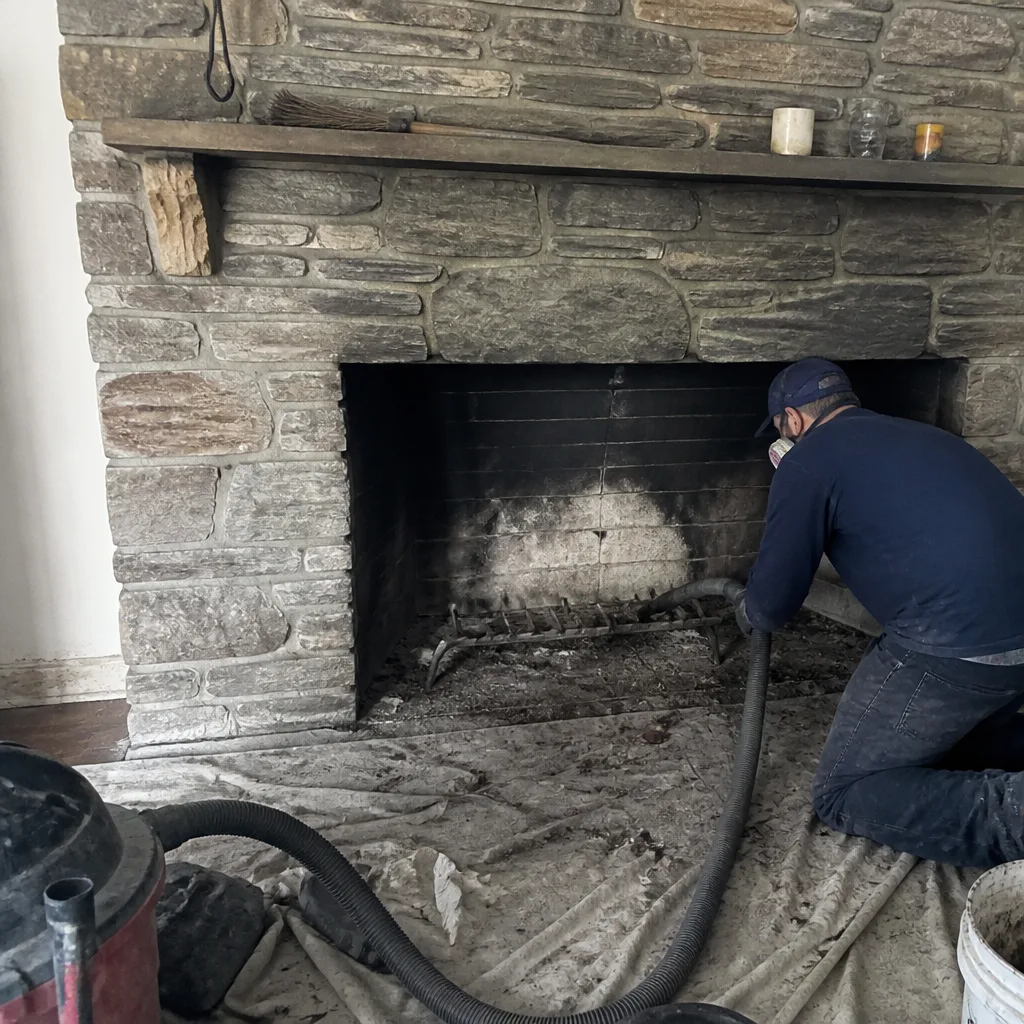
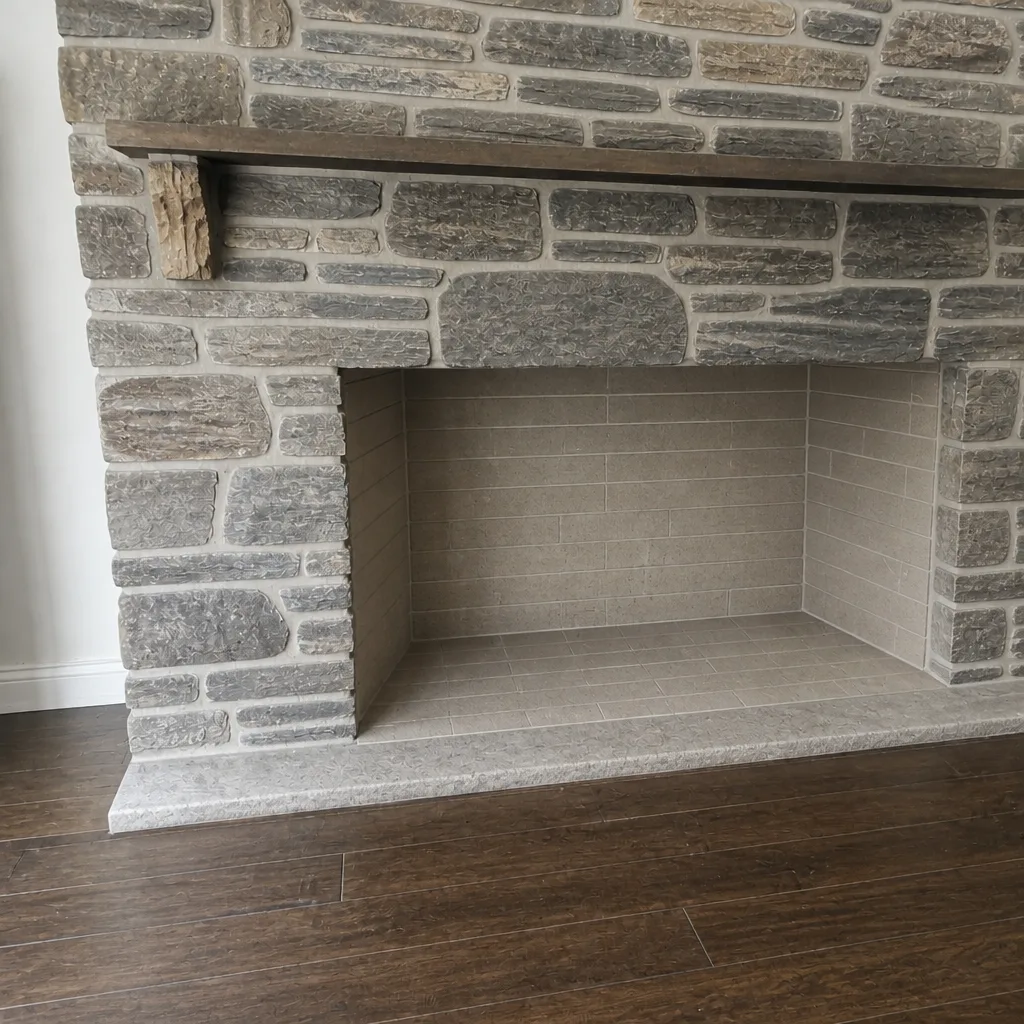
See the difference
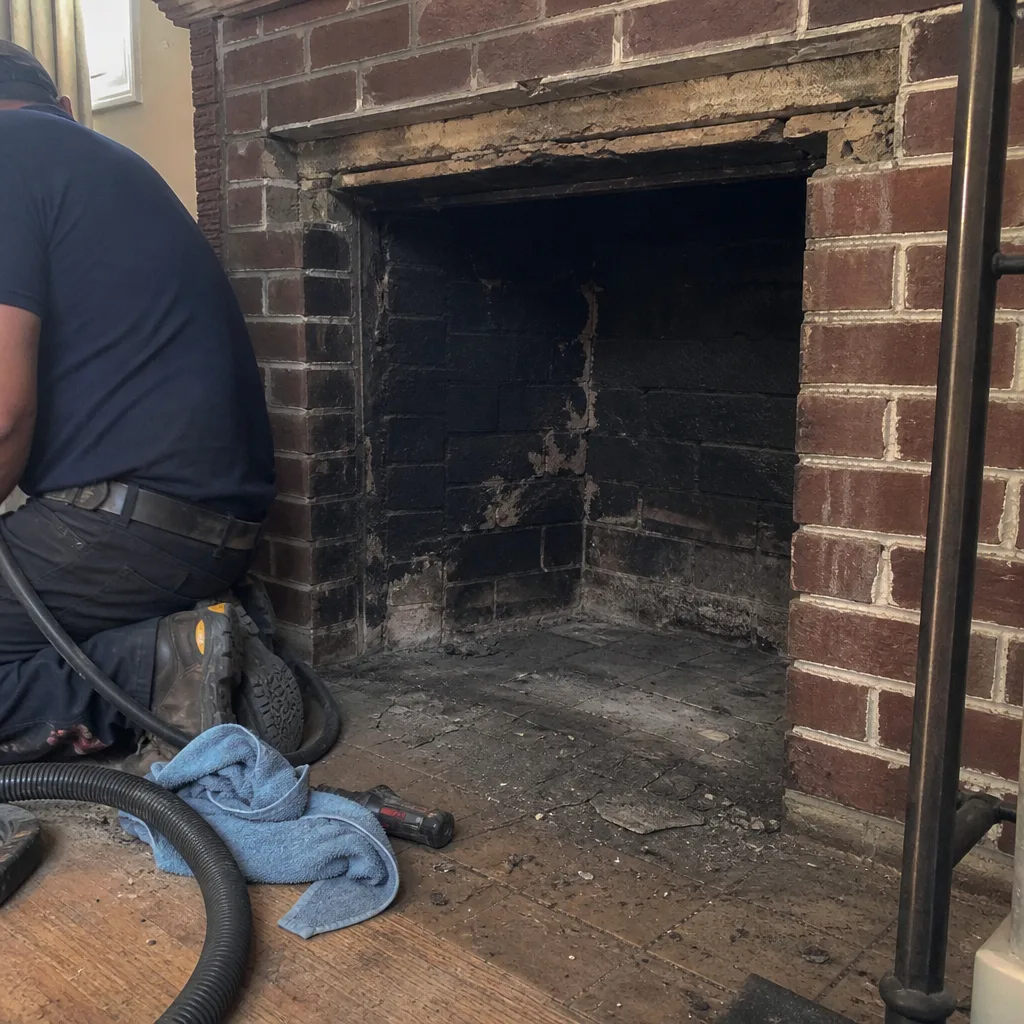 Before
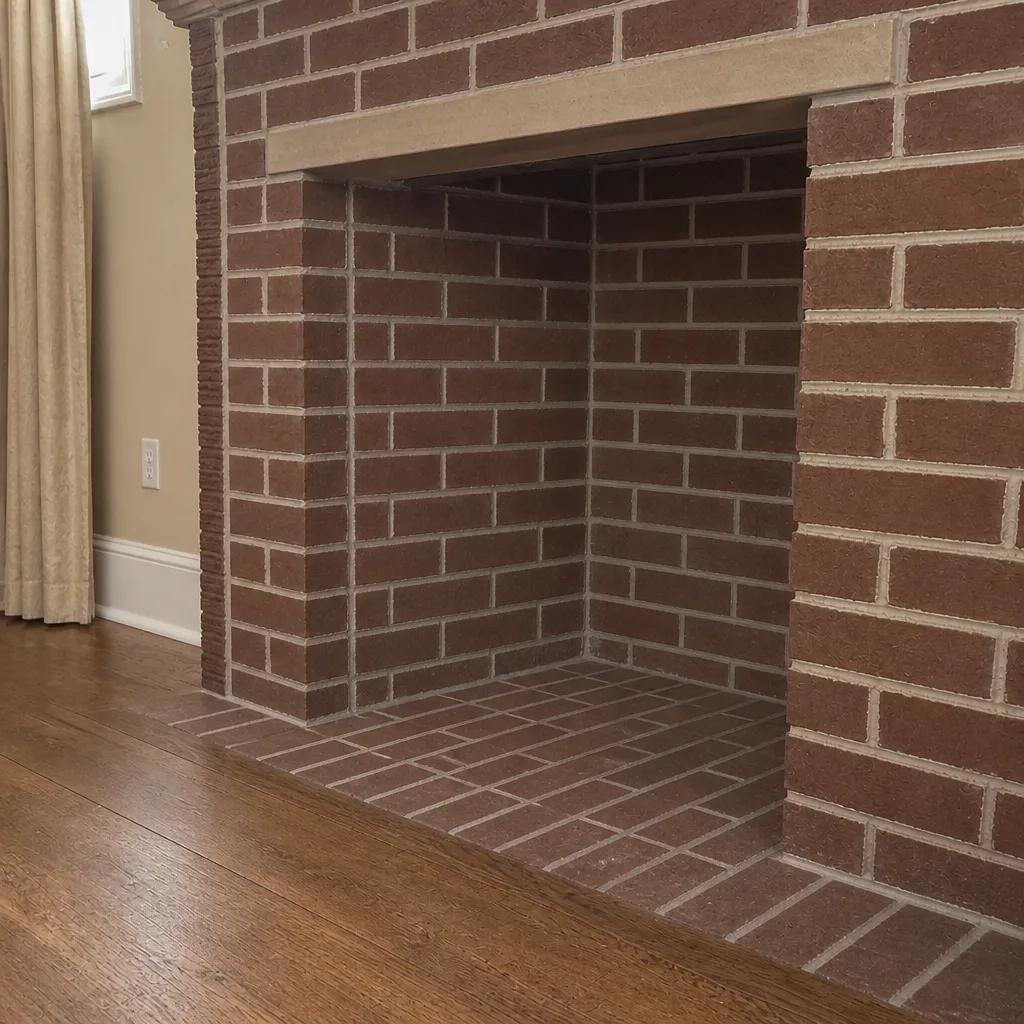 After
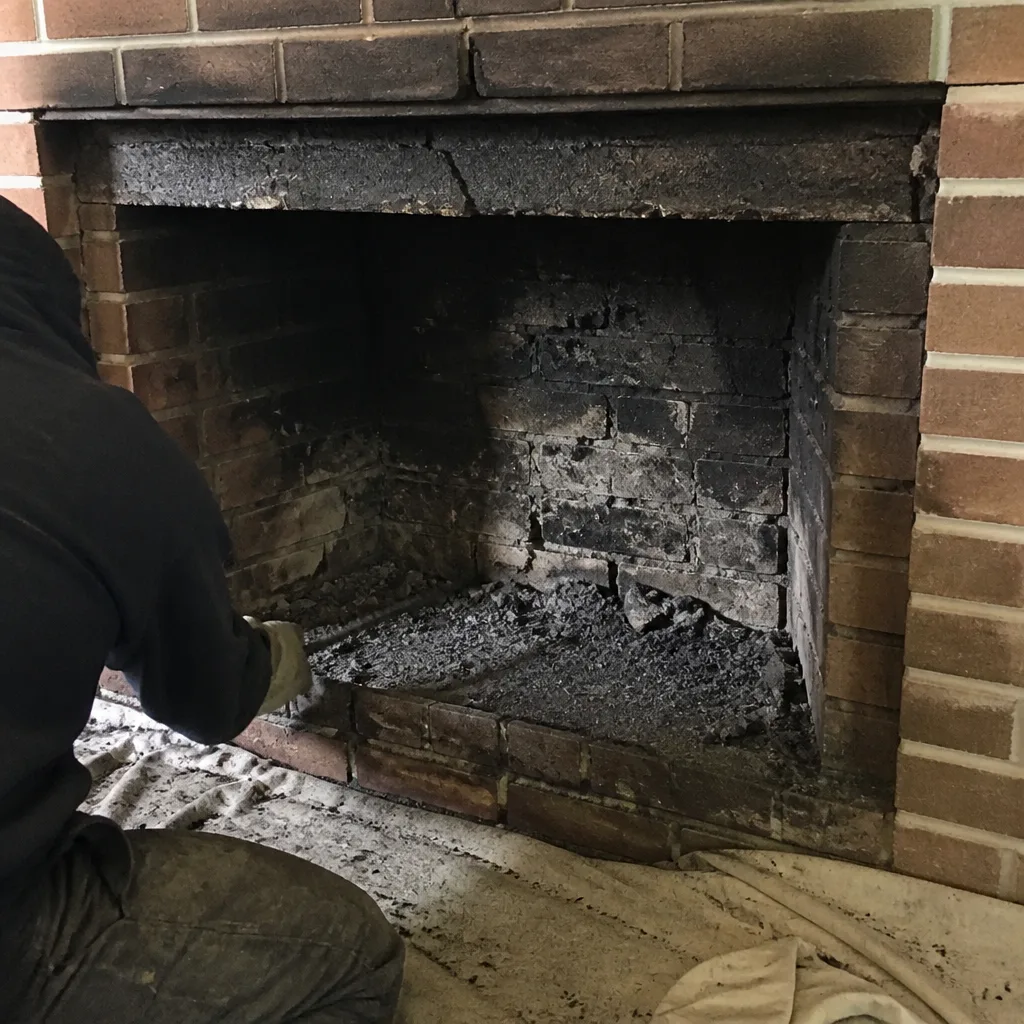 Before
 After
 Before
 After
When to Call a Professional
Call a professional when you don’t have documentation of your flue’s condition, when your chimney hasn’t been inspected in the last year, when the deposits look crusty or glazed, when the flue is unlined or the clay tile is older and unrestored, when you smell smoke indoors, when the crown or cap is visibly damaged, or when any appliance conversion is planned. In a Holmesburg rowhouse, the condition of an original flue is usually the deciding factor. Chimney Sweep Holmesburg offers free estimates in Holmesburg. Call (866) 780-1537. We answer 24/7. Fast dispatch from 7am to 7pm, Sunday through Friday. If your chimney is due for chimney cap & crown attention as well, we handle that on the same visit.
Frequently Asked Questions
Yes, but only in a narrow set of conditions: a straight flue that’s been professionally inspected, a known-intact liner, and Stage 1 soot only. A homeowner with a rod-and-brush kit can remove light soot. The work stops there, because Stage 2 and Stage 3 creosote need chemical treatment and a camera confirms what’s actually in the flue. Call (866) 780-1537 for a free estimate if you’re unsure which stage you’re looking at.
Once a year for inspection is the general rule, and a sweep happens when the inspection says it’s needed. In practice, heavy wood burners need a sweep roughly every season of use, and occasional users may go a year or two between sweeps. Call (866) 780-1537 and we’ll schedule a baseline inspection so the answer is based on your flue, not a guess.
Creosote accumulates quietly. Stage 2 and Stage 3 deposits are the ones that ignite, and a chimney fire can damage the flue or spread into the surrounding structure. In Holmesburg’s attached rowhouses, that risk reaches the neighbors too. Call (866) 780-1537 for a free estimate on an inspection before burning season.
Not always. The flue might just need cleaning and resurfacing. HeatShield ceramic resurfacing addresses deteriorated mortar joints without a full tear-out, and DuraFlex flexible liners are an option when a full reline is warranted. Nothing gets recommended without camera evidence you can view yourself. Call (866) 780-1537 for a free estimate and a straight answer.
Every chimney is different, so the price is set per job by the written estimate rather than by a flat rate. That written scope is what locks in the number, and you agree to it before booking. Call (866) 780-1537. Estimates are free.
Yes. A liner camera run down the flue shows cracked tiles, missing mortar, offsets, blockages and the stage of creosote on the walls. None of that is visible from the firebox. The footage and condition report are yours to keep. Call (866) 780-1537 to book an inspection in Holmesburg.
The Bottom Line
The DIY vs. professional question in Holmesburg isn’t about whether you can hold a brush. You can. It’s about whether you can see what’s happening inside a flue that was built decades ago and has likely never been documented. Stage 1 soot comes off with a kit. Stage 2 and Stage 3 creosote needs chemical treatment, rotary tools and a camera to confirm it’s gone. Unlined and clay-tile flues in Holmesburg’s rowhouses are exactly the case where the gaps matter most. The safe order is: get the flue inspected and documented first, then decide what maintenance routine makes sense. From annual sweep to full liner rebuild, one specialist, one call. We work with industry-vetted brands including HeatShield, Gelco, Olympia Chimney and Famco, and we specify the right material for your flue rather than the easiest one to install.
Call (866) 780-1537 for a free estimate. We answer 24/7. Fast dispatch from 7am to 7pm, Sunday through Friday.
Ready to start with a Chimney Sweep Holmesburg visit? We’ll bring the camera, walk you through what we find, and tell you plainly when work can safely wait.
Written by the team at Chimney Sweep Holmesburg.